Studying Until Breakdown
Pushing study hours to the breaking point delivers results — but at a cost that scales dangerously with the workload ahead.
The 20-Hour Grind
Dr. Justin Sung wanted to be a doctor. At 17 he entered pre-med, waking at 7 for lectures and studying until midnight every day. When a classmate mentioned studying until 2 a.m., Sung escalated — all the way to 20 hours a day, sustained for nine months. He describes rubbing breath mints on his eyelids to stay awake, a tactic he is clear he does "not recommend."
The outcome looked like a success: perfect grades and a place in medical school. The reality was a mental breakdown.
The Wall You Can't Outwork
Medical school doubled the content. The chart below captures the problem plainly.
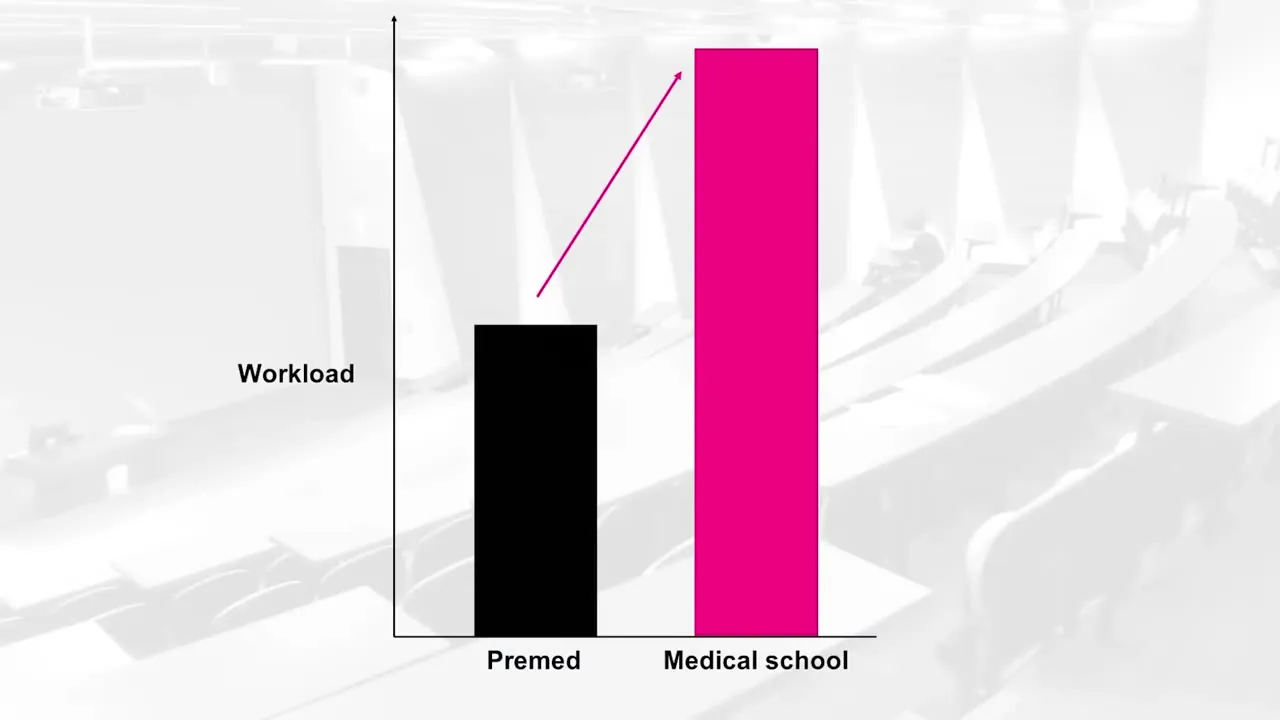
Studying 40 hours a day is not an option. Sung framed the dilemma precisely: "My methods got me excellent results, but at what cost?" Brute-force effort has a ceiling, and that ceiling arrives exactly when the stakes are highest.
- Pre-med workload was already high enough to require near-total sacrifice of sleep and wellbeing.
- Medical school workload was roughly double — making the old strategy mathematically unsustainable.
- Sleep deprivation had already pushed him to a breakdown; repeating the cycle was not viable.
The Real Problem
The 20-hours-a-day approach treated studying as a volume problem: more hours in equals better results out. It worked once, narrowly, and only by burning through health reserves that couldn't be replenished. The question Sung was left with wasn't how to find more hours — it was whether the entire method needed rethinking.
Seeking a Better Way
Frustrated by years of inconsistent results, Dr. Justin Sung took a systematic, research-driven approach to understand why conventional studying fails — and what actually works.
The Cycle That Traps Most Learners
The pattern is almost universal: work hard, get inconsistent results, feel anxious, then compensate by working even harder. Sung recognized this loop not as a personal failing but as a structural problem — one that is "common and avoidable."
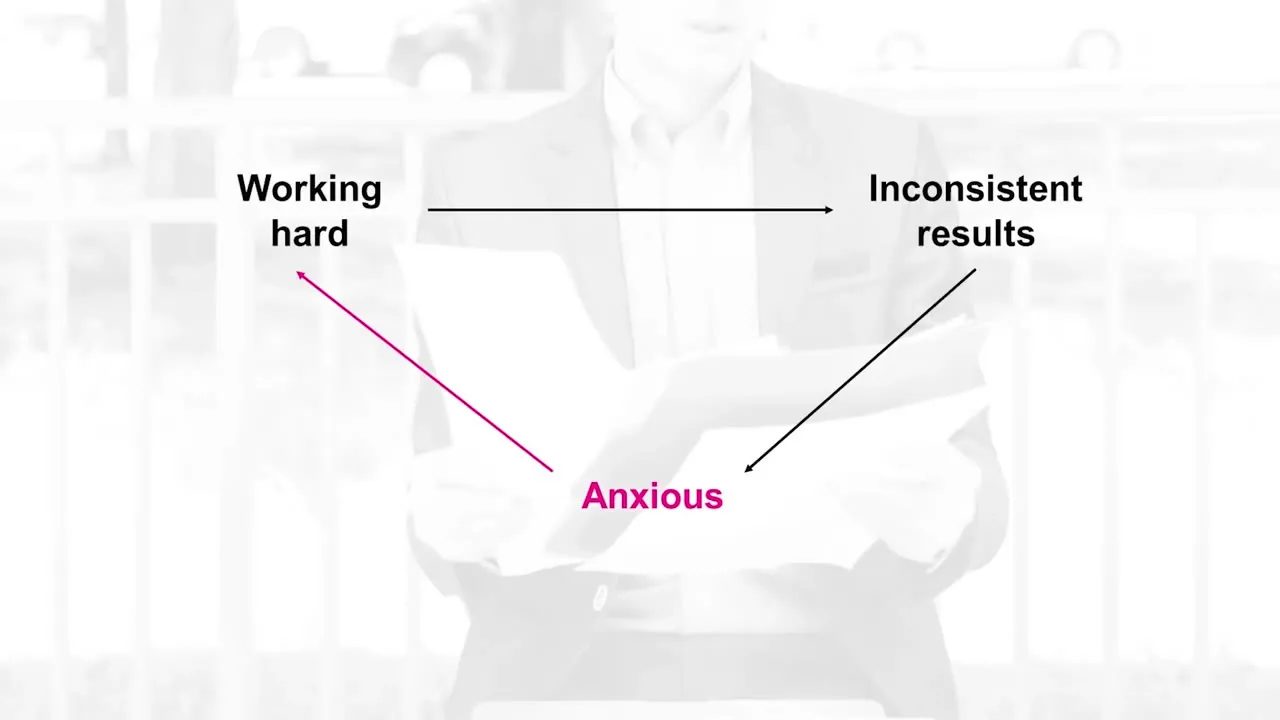
The cycle reinforces itself: anxiety drives more effort, but more effort applied to the wrong methods produces the same disappointing results.
Going All In on the Research
Rather than accepting the status quo, Sung pursued the problem obsessively:
- Read thousands of research papers on learning science
- Adjusted his personal study techniques daily based on findings
- Tested what he learned with the students he was tutoring in real time
- Returned to university after medical school to complete a master's in education
Seeing the methods work for himself and his students gave him confidence that the improvements were genuine, not just personal quirks.
From Doctor to Full-Time Learning Coach
The results were compelling enough that Sung eventually left his career as a medical doctor to teach learning skills full time. He now works with "thousands of people from over 100 countries," helping them learn more efficiently using evidence-backed strategies.
The journey from struggling student to educator wasn't accidental — it was the product of years of deliberate, iterative refinement grounded in research.
Studying vs. Learning Defined
Studying and learning are not the same thing — and confusing the two wastes enormous time and effort.
What Studying Is
Studying is an activity: reading a book, writing notes, reviewing slides. It is the input side of the equation. You can do it for hours and still have nothing durable to show for it.
What Learning Is
Learning means the knowledge is actually in your head and you can use it. Dr. Justin Sung draws a further distinction within learning itself:
- Lower-order learning — recalling or regurgitating facts
- Higher-order learning — nuanced discussion, applying concepts, solving complex problems
Researchers frame this as the difference between surface and deep cognitive processing. Crucially, different types of studying drive different orders of learning — not all study methods are equal in what they produce.
Why the Distinction Matters
Sung used himself as the example: he got into medical school and assumed he was good at studying. He wasn't questioning the method — "all that time and effort that I sunk in, it's just what you do." Hard work felt like the whole answer.
The car breakdown analogy makes the gap vivid. If your car stops running and you open the hood without knowing how an engine works, you cannot fix it. You can stare at it all day. Effort without understanding of the mechanism gets you nowhere.
The same is true for studying. If you don't understand how learning works, you can spend thousands of hours at a desk and still be operating inefficiently — because you're confusing the activity (studying) with the outcome (learning).
Knowing How the Engine Works
Most people study without understanding why their approach works or fails — and that uncertainty breeds anxiety rather than mastery.
The Mechanic Analogy
When results disappoint, the instinct is to guess: Did I study enough? Why didn't I do well? Without a framework for diagnosing the problem, students "end up living in fear of learning." Dr. Justin Sung's remedy is to treat your own brain like an engine — learn how it runs so you can fix it when it stalls.
Metacognition: Thinking About Thinking
The technical term for this self-awareness is metacognition — monitoring and evaluating your own cognitive process. Research consistently links higher metacognition to better learning outcomes, with a compounding benefit:
- You know what went wrong, not just that something did.
- You can adjust strategy instead of repeating the same approach harder.
- Control replaces guesswork, and confidence replaces stress.
Even before results improve, metacognition gives you a map — you know which direction to move.
The Danger of Low Metacognition
Without this self-awareness, the default is to copy whatever peers are doing. The risk is straightforward: "common methods create common results." If everyone around you is using the same surface-level techniques — re-reading, highlighting, passive review — you will land in the same distribution of outcomes they do. Following advice blindly, even well-intentioned advice, produces average results at best.
Becoming Your Own Expert
The shift Sung advocates is from passive student to active diagnostician. This means asking:
- What is my current method actually doing to my memory and understanding?
- Where is the bottleneck — encoding, retrieval, or application?
- What would I change if this approach stopped working?
Answering these questions requires building genuine knowledge of how learning operates, not just logging more hours at a desk.
Limits of Flashcards and Common Methods
Flashcards and spaced repetition are popular, but research points to significant limitations — especially when the goal is complex problem-solving across multiple subjects.
The Appeal of Flashcard Systems
Spaced repetition dominates study advice on social media, and it's easy to see why: it feels productive, it's measurable, and there's genuine science behind basic memorisation. Dr. Justin Sung describes spending "four hours a day, every day" covering over 3,000 flashcards during his pre-med year — a commitment that reflects just how all-in students go on this method.
Where the Method Falls Short
The core problem isn't that flashcards are useless — it's that they're being used as a primary strategy in situations they weren't designed for:
- Juggling multiple subjects simultaneously quickly makes a 3,000-card deck unmanageable and inefficient.
- Complex problem-solving requires connecting ideas across contexts, not just recalling isolated facts.
- Recent research suggests most students relying heavily on these approaches are not reaching top marks.
The method optimises for recognition and recall. It does not, on its own, build the kind of deep, flexible understanding needed for high-stakes reasoning tasks.
The Psychological Cost of Letting Go
Even when a strategy isn't working well, abandoning it feels threatening — because it's the only tool available. "But if that's all you know, then taking that away is confronting." Dr. Sung acknowledges feeling this himself. Students who have invested enormous time in a single method naturally resist evidence that it has limits; the discomfort is real, not a sign of stubbornness.
Recognising this resistance is the first step toward being open to more effective alternatives.
Higher Order vs. Lower Order Learning
Higher order learning — connecting new information to a broader network of knowledge — is fundamentally more effective than the isolated memorization most people rely on.

What Lower Order Learning Looks Like
Lower order learning centers on memorizing facts, definitions, and processes in isolation. Nothing connects to anything else, so the brain treats the information as irrelevant and discards it. The more you accumulate this way, the worse it gets: new isolated pieces pile up and you become "more overwhelmed," not more capable.
What Higher Order Learning Looks Like
Higher order learning is defined by integration. Every new piece of information gets linked to a wider purpose or bigger picture. Key habits include:
- Connecting new ideas to what you already know
- Actively looking for relationships between concepts
- Comparing information against other pieces of information
Because the brain perceives connected information as relevant, it retains it far more readily.
The Snowball Effect
Higher order learning builds compounding momentum. Networks of knowledge act as a stronger foundation — the more you know, the easier it becomes to learn still more. Dr. Justin Sung describes this as a "snowball effect": each new connection makes the next one faster to form. Lower order learners hit the opposite trajectory, accumulating confusion instead of capability.
Why It Matters for Exams and Beyond
Assessments at university level and beyond increasingly test higher order thinking, not recall of isolated facts. Students who rely on rote memorization find themselves underprepared precisely when the stakes are highest. Professionals returning to study face the same trap: years of lower order habits make learning feel "tedious and irrelevant" when they need it most.
The Challenge
Higher order thinking is, as Sung puts it, "literally hard." Research on how to teach it is complex and there is no single agreed-upon step-by-step method — which is why most learners never develop it systematically. The good news is that it is a teachable skill, not a fixed trait.
Step 1: Build a Learning Radar
The first step toward higher-order learning is developing a personal "radar" — a felt sense of when your brain is genuinely processing versus just pushing words across the page.
What the Radar Detects
Everyone knows the sensation Dr. Justin Sung describes: you're reading something and you already know "I am not going to remember this." That uncomfortable feeling of information slipping away is not a sign of low intelligence — it's your brain flagging that the material feels isolated and irrelevant. That signal is data.
Most learners respond by highlighting the passage, copying it into notes, and moving on — which keeps them locked in lower-order processing. The radar reframes that moment as a decision point.
How to Use It
The technique is deliberately simple:
- While studying, keep a tally every time you feel that "slipping" sensation.
- At the end of a session, note the total count.
- Each subsequent session, aim to reduce that count by roughly 10%.
The moment you catch the feeling, don't push forward in the same mode. Instead, "flick up into the higher order" and ask: why does this matter, and how does it connect to something you already know? Making information relevant is the minimum viable act that shifts processing upward.
Why the Tally Works
Counting forces conscious attention onto something most learners never notice. Some people doing this exercise for the first time realize the slipping sensation is the only feeling they have when they study — meaning nearly all of their study time is spent in lower-order mode. That recognition alone can be a turning point.
The 10% reduction target keeps the goal achievable. Trying to eliminate the feeling overnight sets you up for failure; shrinking it gradually builds the metacognitive muscle over many sessions.
Step 2: Group and Connect Information
Grouping information is the mechanism that shifts passive reading into active, higher-order thinking.
What Grouping Actually Does
Clustering facts together forces comparison. To decide whether two pieces of information belong in the same group, you have to examine their relationship — which is precisely the cognitive work that encodes meaning. Simply highlighting or re-reading skips this step entirely.
Prioritizing Relationships
Not all connections are equal. Dr. Justin Sung stresses that learners must go beyond finding relationships and actively rank them:
- Ask: how important is this relationship compared to a similar one?
- Ask: what purpose does this connection serve in understanding the bigger picture?
- Discard or de-emphasize weak links so the strongest structure emerges.
This prioritization is where most students stop short. Grouping without ranking produces a cluttered map, not a clear model.
Your Groups Will Look Different — and That's Fine
The groupings you form will often diverge from how a textbook or lecturer presents the material. That divergence is not a mistake. "The way that we make sense of it is not always the same as the author or the lecturer." A structure that reflects your own reasoning is far more durable than one borrowed wholesale from a slide deck.
The Effort Is the Learning
The back-and-forth of forming, testing, and revising groups feels hard because it is hard — and that difficulty is the signal that learning is happening. Dr. Sung describes this as what "higher order learning feels like." Mental friction here is productive, not a sign you're doing it wrong.
Connecting Steps 1 and 2
Step 1 (building a pre-study radar) primes your brain to notice what matters. Step 2 activates that awareness by forcing you to organize and evaluate it. Together they move you off the low-effort end of the learning spectrum and into genuine comprehension.
Step 3: Leverage Note Taking
Note taking only improves learning when it forces your brain to think — not when it lets your brain off the hook.
The Problem with Linear Notes
Most people write notes left to right, top to bottom, sequentially down the page. Dr. Justin Sung calls this "linear note taking," and it has a core flaw: knowledge is not linear. Sequential notes make it nearly impossible to express the relationships and groupings that make information meaningful. The result is hours of writing that produces little actual understanding.
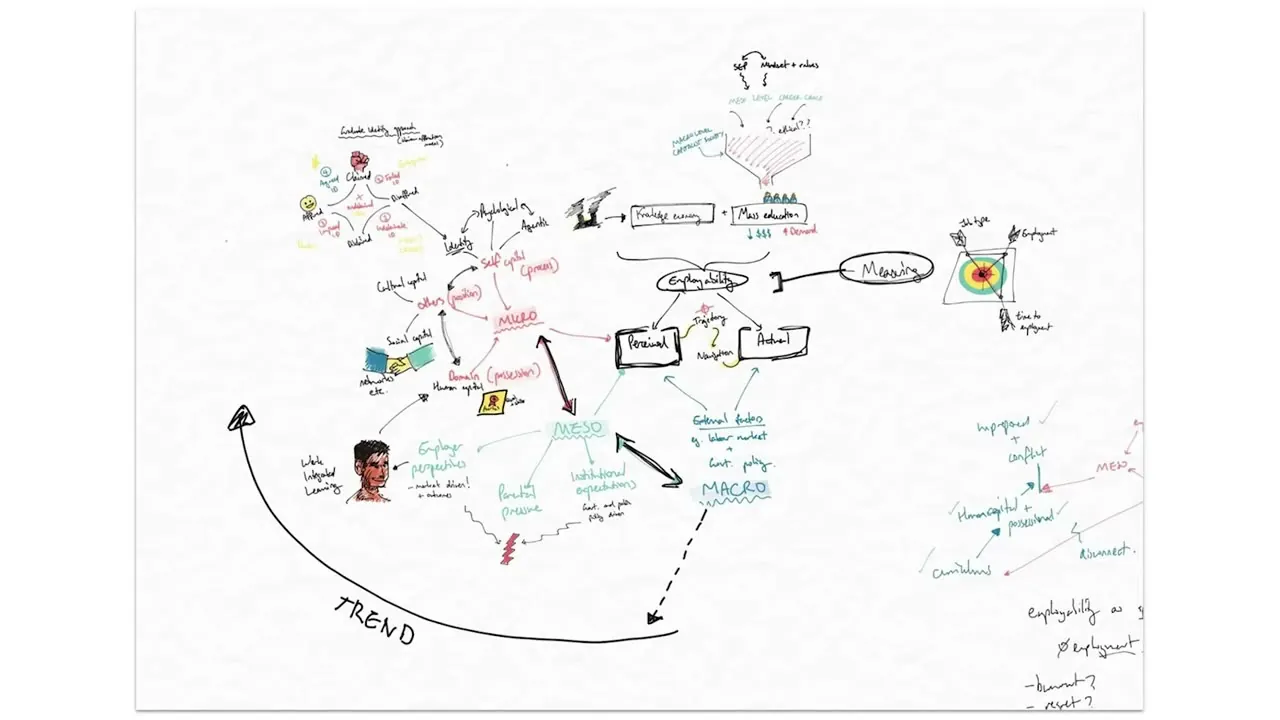
Switch to Non-Linear Methods
Non-linear note taking means actively arranging ideas into maps, clusters, and hierarchies rather than sentences. When you build these structures yourself, you are doing the cognitive work that creates deep learning. A few principles:
- Decide which concepts belong in the same group — don't just list them sequentially
- Draw arrows between ideas deliberately, thinking about direction and meaning
- Vary the weight or thickness of connections to reflect importance
- Resist apps that auto-generate maps with a button press — the thinking is the point
Even software that builds relationship maps automatically can make the process too passive. The manual effort of deciding where an arrow goes, and how significant it is, is precisely what "higher order learning involves."
Where to Practice
Non-linear note taking is hard to do in real time during a lecture. Sung recommends starting with books, where you can pause, reflect, and restructure before committing ideas to the page. Once the habit is built in a low-pressure environment, it transfers to faster-paced settings.
Results from 5,000 Students
Applying research-backed learning methods at scale produces dramatic, measurable results — cutting the time needed to reach deep retention by half or more.
The System and Who It Reaches
Dr. Justin Sung built a complete, end-to-end learning system from the methods described throughout the talk. The system is deliberately broad in its reach:
- Students as young as 12 years old
- University and postgraduate learners
- Adults in their 70s, post-retirement
This range demonstrates that the underlying cognitive principles are not age-specific — they reflect how human memory and comprehension work regardless of life stage.
What the Data Shows
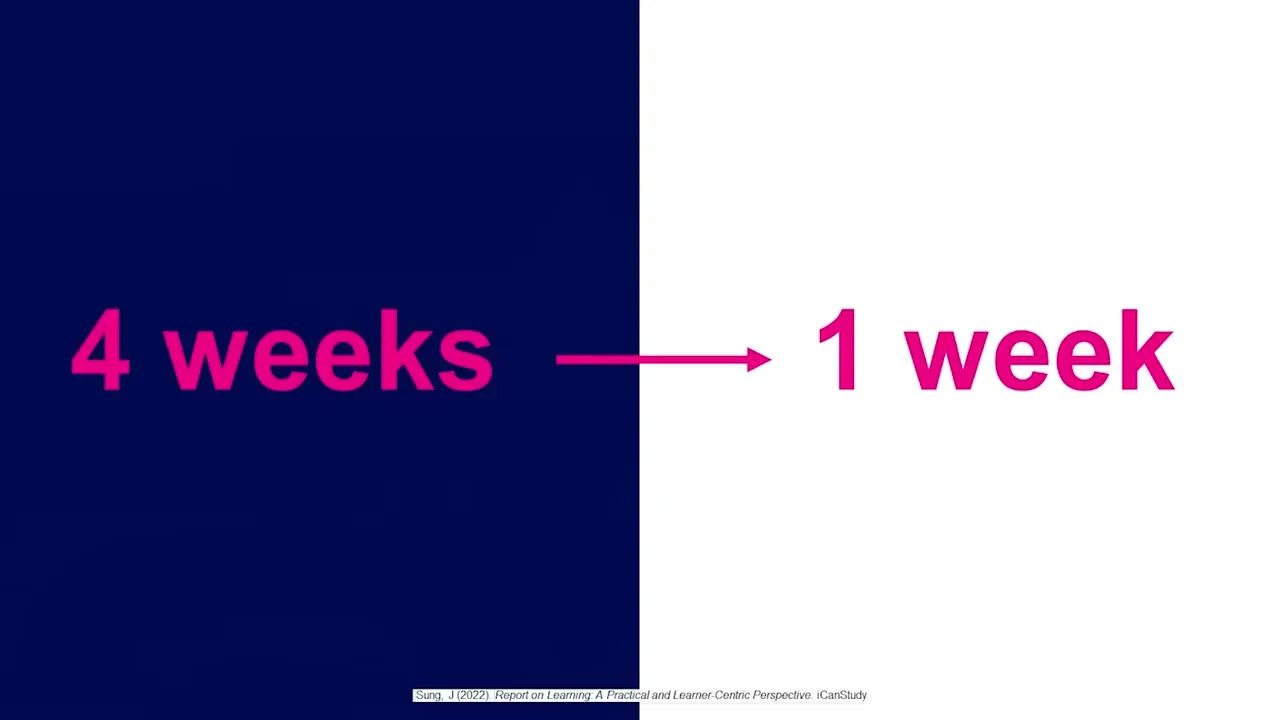
Over two years, data was collected from roughly 5,000 students across 120 countries. The headline finding: learners using these methods reach a level of understanding and retention "that would normally take them four weeks in just one or two weeks."
That is a 2–4× efficiency gain — not from studying harder or longer, but from studying differently.
Effort Is the Point
Higher-order thinking feels hard — and that difficulty is precisely the signal it is working.
The Misinterpreted Effort Hypothesis
Research into learning identifies a consistent cognitive trap: when a strategy feels effortful, we interpret that effort as evidence of ineffectiveness and abandon the approach. This is the misinterpreted effort hypothesis. The irony is that the most effective learning strategies are also the most demanding ones.
The gym analogy makes the trap vivid. Imagine walking into a gym, picking up a heavy weight, and then putting it down because the lifting is hard — concluding the workout "isn't working" and going home. Avoiding cognitive effort in studying is exactly that mistake.
Effort Is a Skill, Not a Fixed Trait
Dr. Justin Sung is direct on the most common objections — "I'm not smart enough" or "I'm too old for this." After working with a wide range of learners, his conclusion is clear: higher-order thinking is a trainable skill. Like any skill, it comes more naturally to some people, but deliberate practice genuinely makes it easier over time.
The time-and-effort objection is also real. Most people don't adopt more effective strategies because those strategies feel costly. Acknowledging that cost honestly — rather than pretending the approach is easy — is what makes the skill-based framing credible.
What Happens Without It
Skipping higher-order thinking doesn't eliminate effort — it just redirects it into low-efficiency repetition. You spend more total hours studying, retain less, and remain vulnerable to the same exam pressure and forgetting curves. The effort is still there; it's simply wasted.
- Passive re-reading feels easy but produces shallow encoding.
- Effortful strategies feel harder but compress the time needed to reach the same outcome.
- Avoiding difficulty reinforces the false belief that you're not capable of deeper learning.
Study Less, Learn More
Learning at a higher order is not slower — it is the only approach that actually saves time across weeks of real study.
The Hidden Cost of Irrelevant Learning
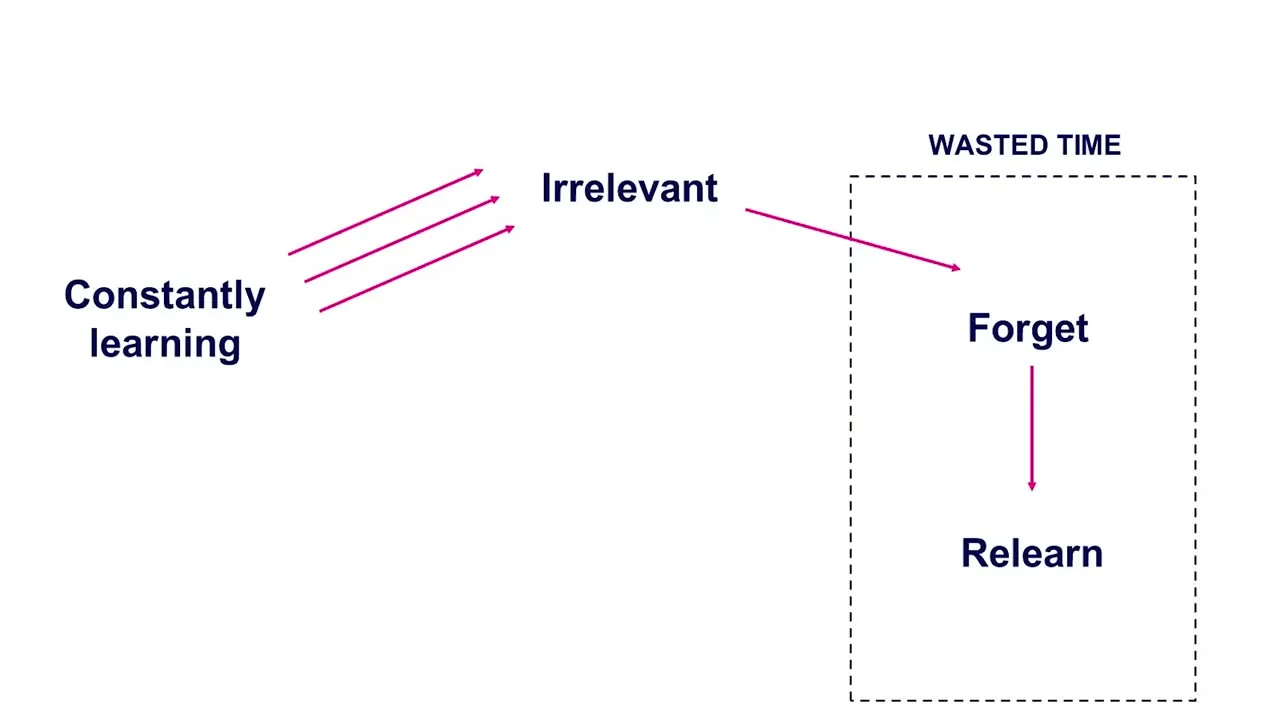
Most people assume cramming more sessions into a day means covering more ground. The problem is that a brain which never deeply processed material simply flags it as irrelevant and discards it. The cycle that follows is expensive:
This loop is easy to dismiss when you think of studying as one afternoon session. Stretched across weeks of revision, the wasted hours compound dramatically.
Why Higher-Order Learning Wins on Time
Lower-order thinking — memorizing isolated facts — keeps you stuck at the surface. The brain never signals that the material matters, so retention collapses. Higher-order learning encodes meaning and connection, which means far less relearning later.
Dr. Justin Sung frames it directly: if you "don't have time to constantly just relearn things," then higher-order learning is "actually more time efficient." The upfront investment in deeper processing pays back in reduced repetition.
Study or Learn?
The closing challenge is blunt: everyone has the same 24 hours. Filling them with shallow study sessions that require constant repetition is a choice, not a necessity. The alternative — fewer, more cognitively demanding sessions that stick — demands discomfort up front but returns far more usable knowledge.
- Shallow study → fast coverage, low retention, high relearning cost
- Higher-order learning → slower per session, high retention, low relearning cost
- Across a study period, the second path consistently takes less total time